
How GT3 Compares to Formula 1: Cost, Cars, and Accessibility
GT3 and Formula 1 operate in very different worlds. Here's how they compare on car technology, the cost to compete, driver accessibility, and broadcast coverage.
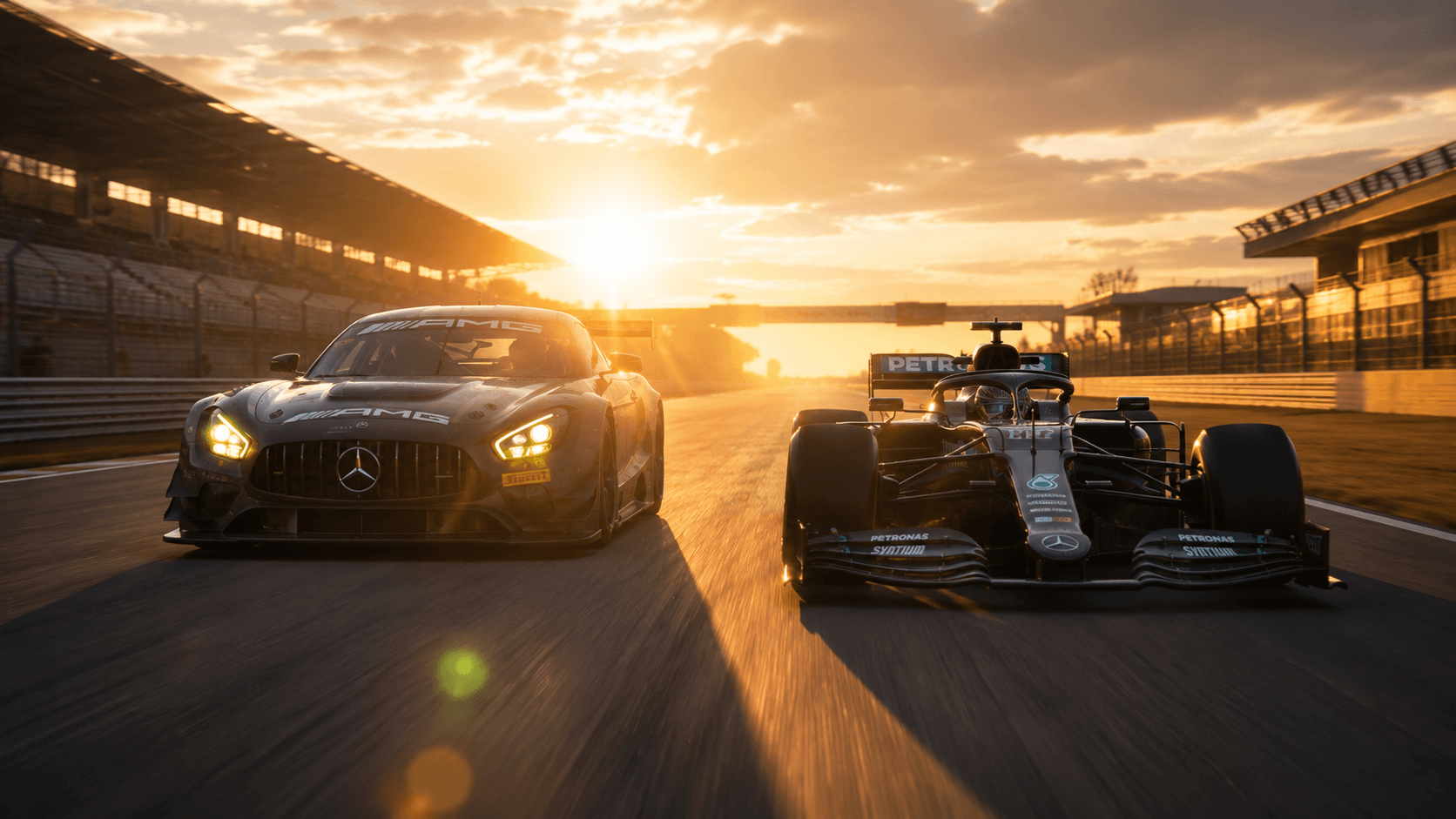
Car differences
Formula 1 and GT3 cars are as different as motorsport gets, despite both being at the top of their respective ladders.
An F1 car is an open-wheel, open-cockpit single-seater built entirely from scratch with no relationship to a road car. The 2024-spec cars produce around 1,000 horsepower from a 1.6-litre turbocharged hybrid V6, generate more than their own weight in downforce at speed, and lap a circuit like Spa around 20 seconds faster than a GT3 car.
A GT3 car is a closed-cockpit, two-seater grand tourer derived from a road car. Producing 500 to 550hp and weighing around 1,250kg with BoP ballast, they are fast by almost any normal standard but a different category of machine to an F1 car.
The visual difference is immediately obvious. F1 cars are alien, skeletal, and purpose-built for pure speed. GT3 cars are recognisable; you can see the Ferrari or the Porsche in the silhouette. That familiarity is part of their appeal.
Cost to compete
The cost gulf between F1 and GT3 is vast, though GT3 is still expensive by any normal measure.
Formula 1: The constructor cost cap (introduced in 2021) limits spending to $135 million per year for the largest teams, and that excludes driver salaries, marketing, and senior staff. Before the cap, top teams spent $400 to $500 million annually. A competitive midfield team spends $150 to $200 million per season.
GT3: A full season in GT World Challenge Europe's Endurance Cup, running one car with a two or three-driver lineup, costs approximately €1.5 to €3 million for a customer team. The car itself costs €450,000 to €550,000 to purchase. Entry-level amateur programmes in smaller national GT3 championships can be done for €300,000 to €500,000 per season.
GT3 is not cheap. But it is the most accessible tier of internationally competitive, manufacturer-backed GT racing that exists.
Driver Accessibility
This is where GT3 differs most fundamentally from F1. Formula 1 has no room for amateur drivers; every seat on the grid is occupied by the best professional racing drivers in the world, each paid millions per year.
GT3 is explicitly designed to include amateurs. A Bronze-graded driver (someone who races as a hobby rather than a profession) can buy a seat in a GT3 team, share a car with a professional, and race at Spa, Monza, or Laguna Seca. No other top-level international motorsport category works this way.
This has a profound effect on the culture of GT3. It creates a community that spans from factory-backed professional drivers to wealthy business owners racing for personal fulfilment. The paddock at a GT World Challenge event feels different from F1: more accessible, less corporate, with a genuine mix of people all connected by the same cars and circuits.
TV coverage
F1 dominates motorsport broadcast globally. Sky Sports, ESPN, and major broadcasters in almost every country carry the full season. The Netflix Drive to Survive series transformed F1's cultural reach and attracted millions of new fans in the 2020s.
GT3 coverage varies significantly by region and championship. SRO streams GT World Challenge races live and free on YouTube globally, a more accessible model than F1's pay-TV arrangements. IMSA's races are on Peacock in the US. The Spa 24 Hours attracts mainstream broadcast coverage across Europe.
The tradeoff is production scale. F1 broadcasts feature dozens of cameras, real-time telemetry graphics, and dedicated commentary teams for every market. GT3 broadcasts are professional but smaller-scale.
For a new fan, the YouTube accessibility of GT3 racing is a genuine advantage. There is no paywall between you and the racing.
Why fans love both
F1 and GT3 attract fans for different reasons, and many people who love one also love the other.
F1 fans are drawn to: the spectacle of the fastest cars in the world, the political and technical drama of constructors spending billions to find tenths, the superstar driver narratives, and the global circus of a travelling show that visits 24 countries.
GT3 fans are drawn to: enormous grids with 50+ cars, close multi-class racing, recognisable road-car silhouettes, the drama of 24-hour events, the Pro-Am mix, and a paddock culture that feels more accessible and community-driven.
The cleanest way to put it: F1 is sport at the extreme edge of human and engineering performance. GT3 is racing in its most abundant, accessible, and varied form. Both are extraordinary. You do not have to choose.
// Ready to explore?