
Why GT3 Is the World's Most Popular Racing Category
GT3 is the most widely-run racing class in the world. Here's why: cost controls, manufacturer rivalry, a global calendar, and pathways open to amateur drivers.
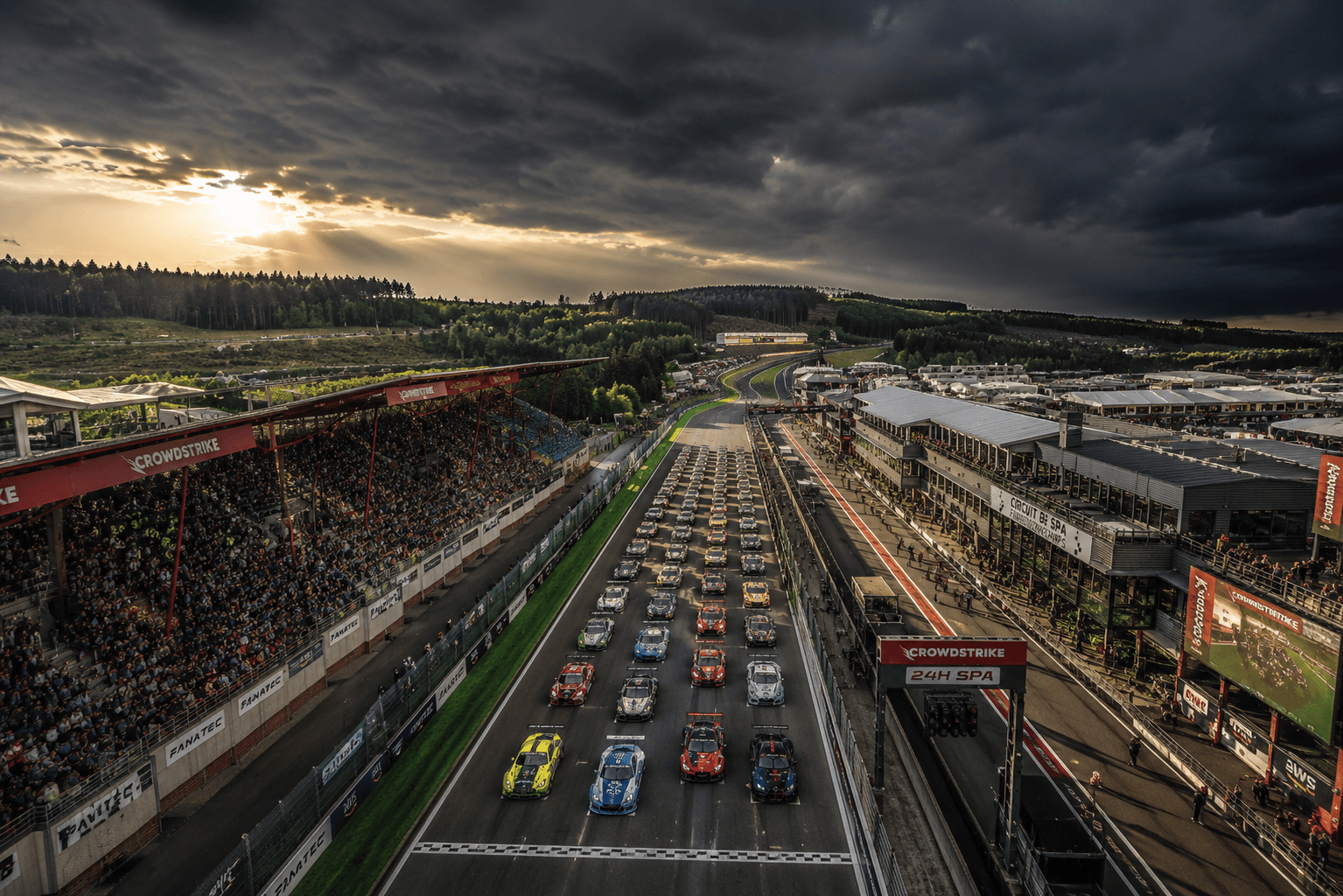
Cost-controlled racing
The single most important reason GT3 is so popular is that it is cost-controlled in a way that makes running a competitive programme genuinely viable for smaller teams.
Manufacturers sell GT3 cars at a fixed price, typically €450,000 to €550,000, with a commitment to provide customer support, spare parts, and software updates throughout the car's homologation cycle (usually five years). A team that buys a GT3 car gets a competitive, reliable, manufacturer-backed package with known running costs.
Compare this to prototype racing, where a top-level LMP2 team might spend €3 to €5 million on a car and receive limited manufacturer support, or to Formula 3, where a season can cost €700,000+ for a car that will be uncompetitive within two seasons.
The BoP system means that even a smaller team with a less-glamorous manufacturer can fight for wins. You do not need the newest car or the biggest budget to be competitive; you need the best strategy and the right driver lineup.
Manufacturer involvement
More than 20 manufacturers currently produce homologated GT3 cars, a number unmatched in any other racing class. Ferrari, Porsche, Lamborghini, Mercedes-AMG, BMW, Audi, McLaren, Aston Martin, Bentley, Nissan, Lexus, Chevrolet, Ford, Honda, and others all have active GT3 programmes.
This level of manufacturer participation creates several benefits. Factory teams raise the competitive standard and media profile of every championship they enter. Factory drivers bring championship-winning talent to grids. Factory backing means car development continues throughout the homologation period rather than stagnating.
It also means sponsorship. Major manufacturers bring major sponsors, which brings media coverage, which attracts more manufacturers. The GT3 ecosystem is self-reinforcing. Each new manufacturer that joins strengthens the appeal of the category for the next one.
Global reach
A car homologated for GT3 can race in any GT3 championship worldwide. The same Porsche 911 GT3 R that races in Germany at the ADAC GT Masters might appear at the Bathurst 12 Hour the following month, then at the Rolex 24 at Daytona.
This global interoperability is unique to GT3. Teams can build a single programme around one car and travel the world. Drivers can build international careers without switching cars. Sponsors get global exposure from a single partnership.
It also means the world's best GT3 drivers converge at the biggest events. The Spa 24 Hours or Bathurst 12 Hour are genuinely global talent gatherings, with factory works drivers from a dozen manufacturers, international amateur partnerships, and specialist endurance racers all competing on the same circuit.
Driver pathways
GT3 sits at the intersection of professional and amateur motorsport in a way that creates genuine career pathways in both directions.
For young professionals, GT3 is a proving ground. A driver who dominates GT4 moves up to GT3, builds a record in national championships, gets noticed by factory programmes, and potentially reaches Hypercar or other top-level categories. The ladder is clear and meritocratic.
For amateurs, GT3 represents the highest level at which non-professionals can compete internationally. A Bronze-graded driver can buy their way into a GT3 programme, race at the world's great circuits, and measure themselves against real professionals in the same field.
Both groups benefit from sharing the same grids. Professionals get paid race seats. Amateurs get a meaningful competitive context. Teams get the revenue from driver fees plus the profile from professional results.
Fan accessibility
Compared to most top-level motorsport, GT3 is remarkably accessible for fans.
Ticket prices: paddock access at GT World Challenge events is affordable compared to F1. Many smaller GT3 events allow fans to walk the paddock and get close to the cars and drivers.
Online coverage: SRO streams most GT World Challenge races live and free on YouTube. The full Spa 24 Hours broadcast is available globally without a subscription.
Car recognition: the GT3 grid is full of cars that fans recognise from the road. A Ferrari, a Porsche, a Lamborghini. These are aspirational cars with cultural weight beyond racing. Fans connect with the cars, not just the drivers.
Number of cars: a typical GT World Challenge Endurance Cup race has 50 to 60 cars on the grid. There is always something happening somewhere.
The combination of accessible ticketing, free online streams, recognisable cars, and enormous grids makes GT3 uniquely welcoming to new fans.
// Ready to explore?